
Trust
The 18th rare earth mineral powering the AI economy

By 2030, we won’t be debating whether AI agents exist inside companies. We’ll be debating how many layers of them exist.
AI agents will manage AI agents.
Those agents will deploy other agents.
And many of the workflows that once employed white-collar knowledge workers will be executed autonomously.
That doesn’t eliminate humans.
It creates a supervision crisis.
Every automated system introduces a monitoring requirement.
Every monitoring requirement introduces a liability surface.
And every liability surface collapses into a single question:
Can you trust the output?
When AI agents begin making operational, financial, legal, and compliance decisions at machine speed, the scarcest resource in the enterprise will not be compute, models, or even data.
It will be trust.
In the agentic era, trusted judgment becomes scarce.
Why?
Trust is not generated by model size.
It is generated by structured, accountable, ethically sourced human intelligence layered on top of AI systems.
That is the gap.
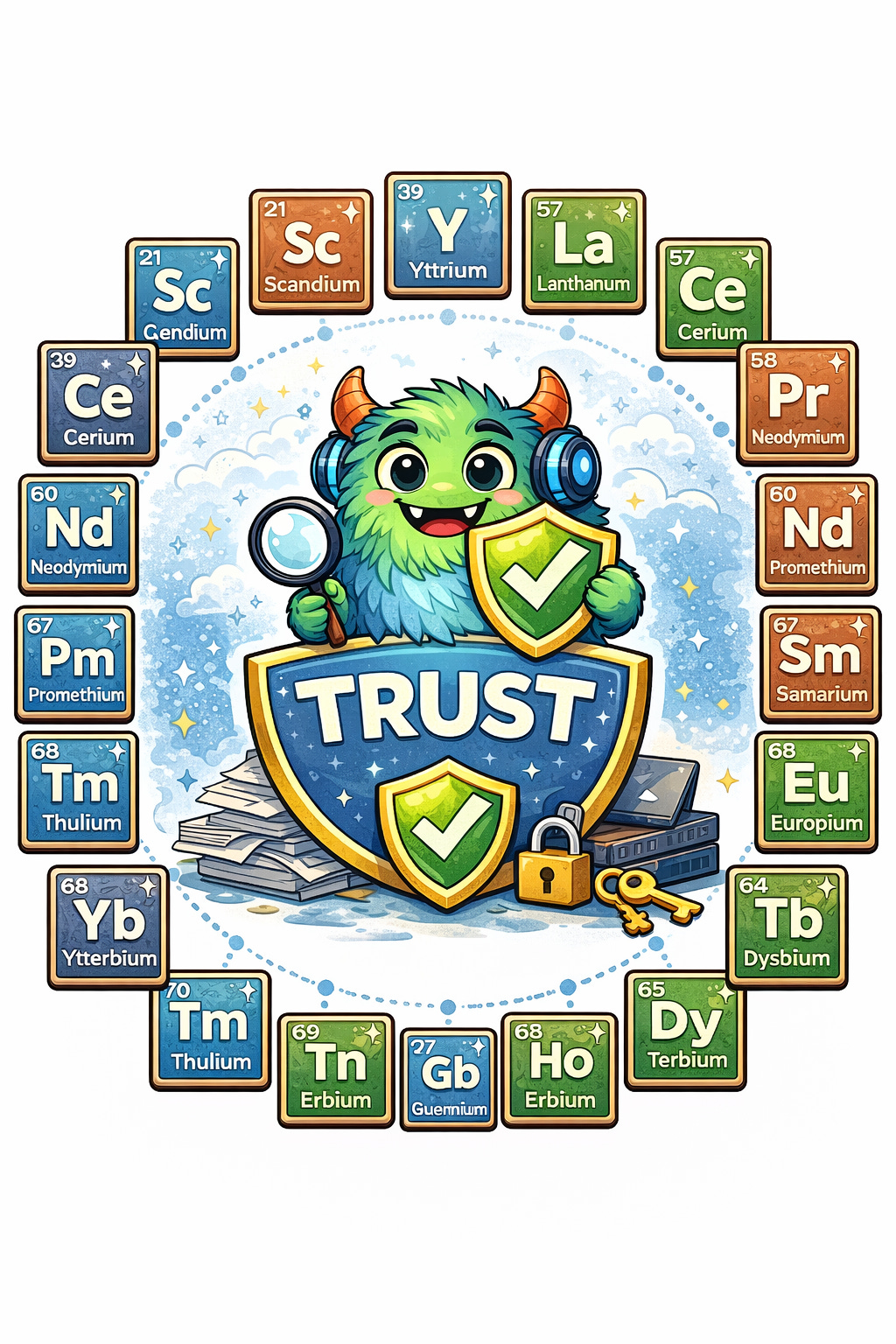
The 17 rare earth elements, from neodymium and dysprosium to scandium and yttrium, are the invisible infrastructure of modern civilization. They power the magnets in electric vehicles, the phosphors in your smartphone screen, the precision guidance in defense systems, the turbines in wind farms, and the data centers driving AI. They are not “rare” because they don’t exist. They’re rare because economically viable concentrations are difficult to find, refine, and control. That scarcity is why nations compete for them and why supply chains revolve around them. But as we move into an era where AI agents operate critical systems at machine speed, there is an emerging resource even scarcer than rare earths: trust.
Not blind trust, verifiable, auditable, accountable trust. If rare earth elements power the hardware of the modern economy, trust will power its decision-making layer. In that sense, trust becomes the 18th element, the invisible material that makes every other system safe to deploy.
AI Monster is building the infrastructure layer that converts human AI judgment into machine-readable, continuously validated, provenance-tracked intelligence, organized by job function and governed by licensing and accountability.
In a world of autonomous agents, enterprises will pay a premium for:
Grounded knowledge graphs
Verified best practices
Human-validated risk boundaries
Structured supervision frameworks
Because when agents manage agents, who supervises the supervisors becomes the trillion-dollar question.
Trust becomes currency.
And the company that owns the trust layer, the provenance, validation, and structured human judgment embedded into AI workflows, owns the highest-margin, most defensible position in the stack.
AI Monster is not competing to build another model.
We are cornering the market on the scarcest asset of the agentic economy:
Enterprise-grade AI trust.